


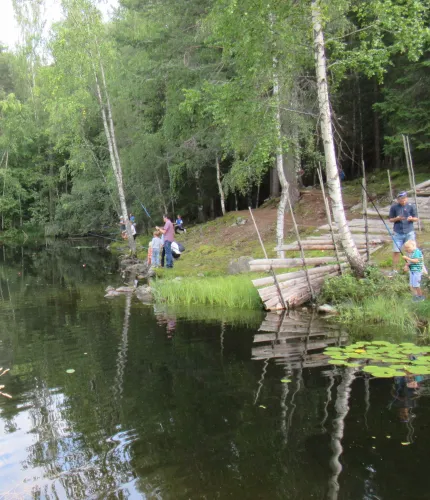
Fishing in Lillehammer, Mjøsa and Gudbrandsdalen
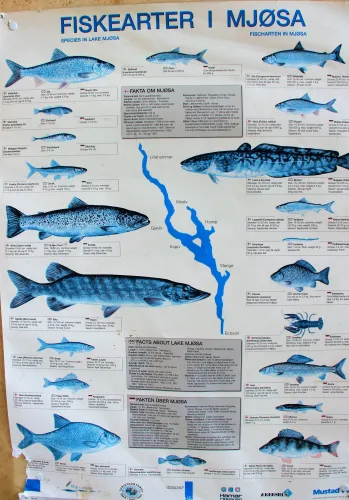
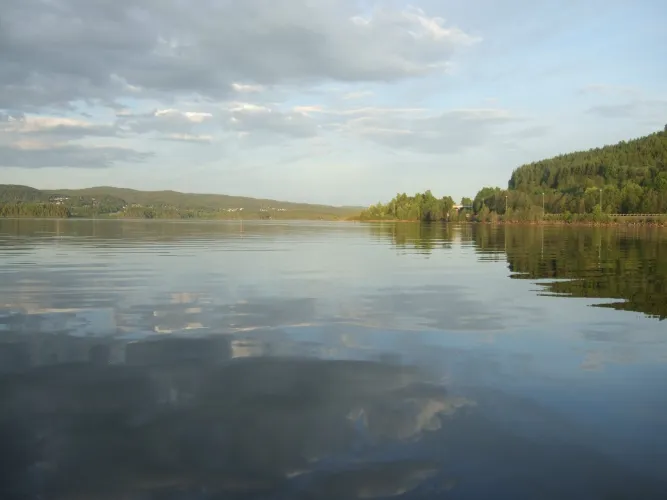
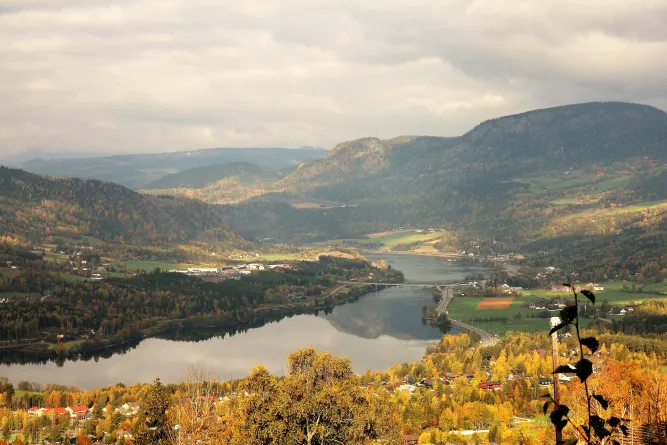
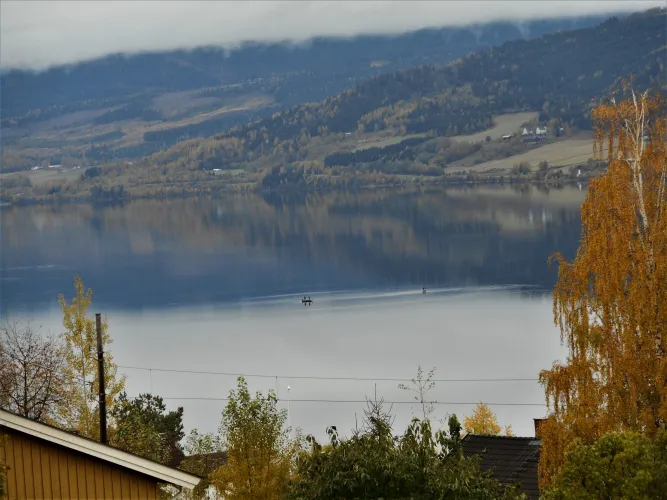
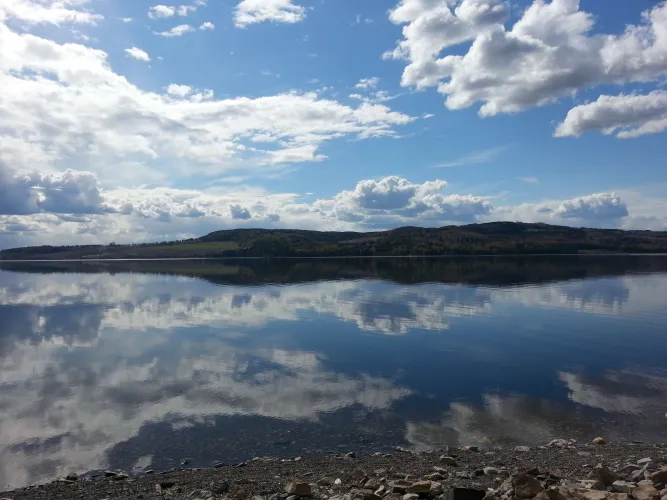
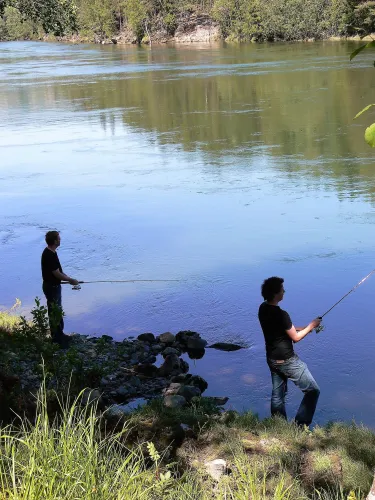
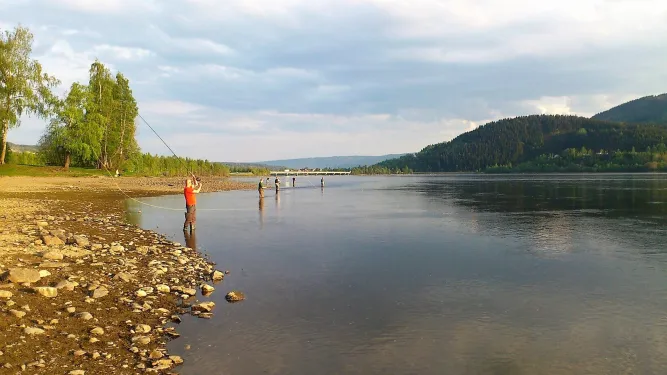
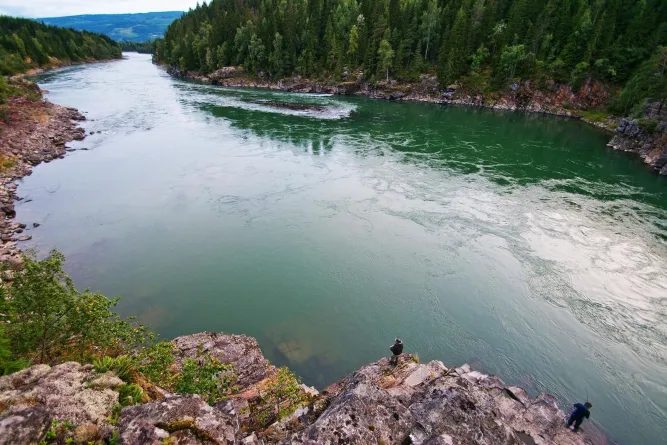
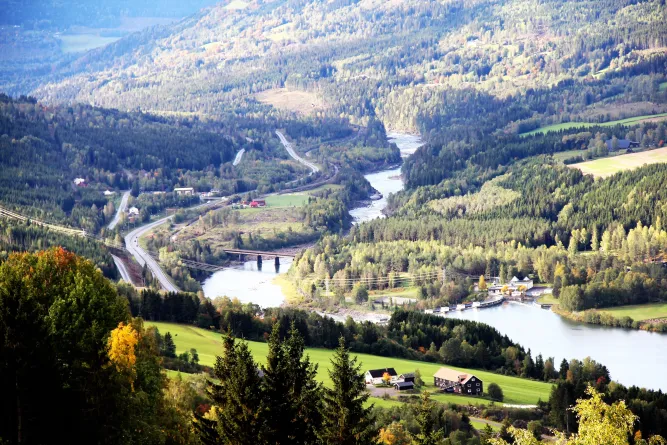
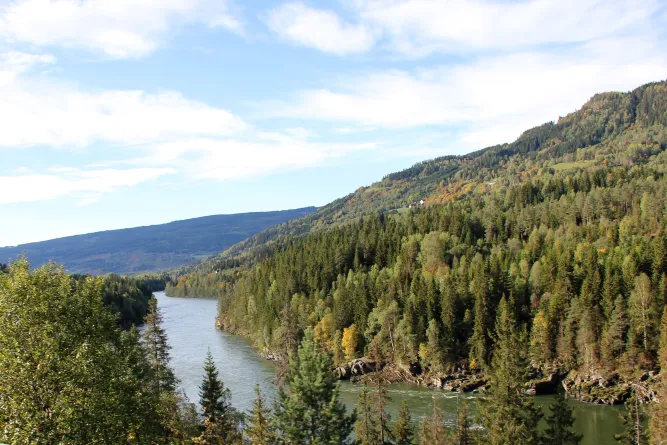
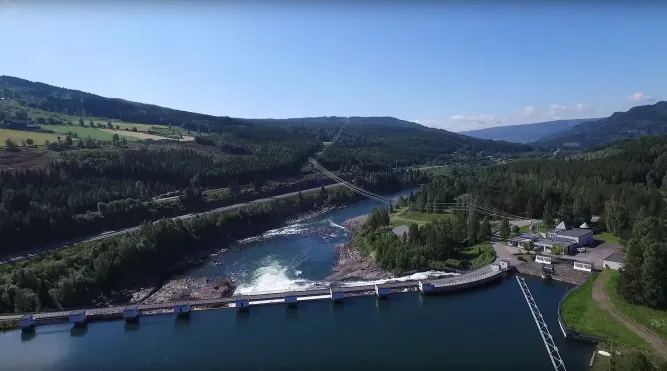
There are first-class fishing opportunities in Lillehammer, Mjøsa and Gudbrandsdalslågen. Mjøsa, which is Norway's largest lake, is home to as many as 20 different species of fish, while Gudbrandsdalslågen is known as one of Norway's foremost rivers for fishing.
There are good fishing opportunities in Lillehammer, Mjøsa and Gudbrandsdalslågen. In Norway's largest lake, Mjøsa, there are 20 species of fish and Gudbrandsdalslågen is one of the best fishing rivers in Norway.
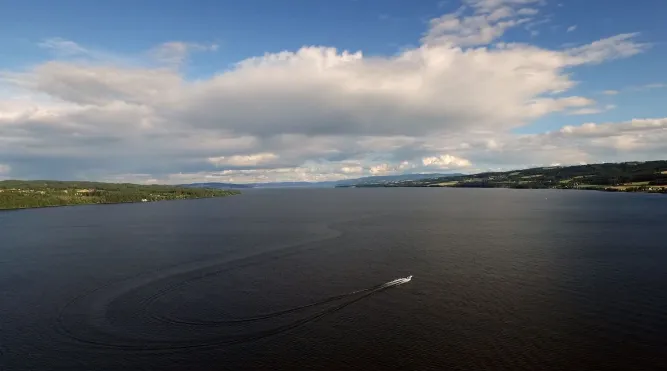
In Mjøsa, there are 20 species of fish in addition to freshwater crayfish. Mjøsa is rich in fish, especially vendace, whitefish, trout, perch and pike. Fishing for vendace (lågåsild) has long traditions, but interest in this fishery is now in decline. However, fishing for Mjøsa's large trout is growing.
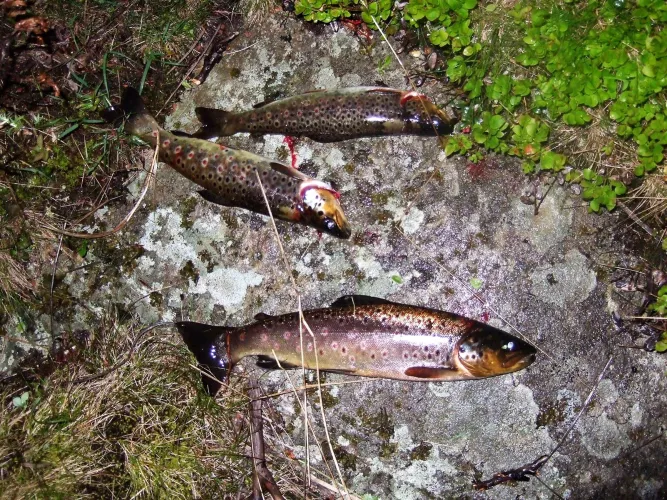
The trout spawn in several of the tributaries (the most famous is the Dog Trout) and grow large in Lake Mjøsa, where it can weigh up to 15 kg. The trout population in Mjøsa was reduced due to regulations in the rivers and due to pollution, but various management measures mean that fishing is good today. Mjøsa is the only known locality for sculpin in Norway.
The large trout population in Mjøsa is one of Europe's largest. It consists of a number of different tribes that have their spawning rivers and streams. There are more than 40 rivers and streams around Mjøsa, each of which has its own distinctive strains of Mjøsa trout. The common feature is that they all use the lake as a breeding area. The size of the trunk is biologically adapted to the river/stream it comes from.
The reason for the size and peculiarity of the Mjøsa trout is due to several natural conditions;
Mjøsa's topographical conditions with large and deep water masses
The lake's large number of good spawning rivers and streams
The lake's rich population of grazing fish, especially hookfish and vendace
From the book "Water quality in Mjøsa, then and now by Ole Nasahoug
Almost all 20 species of fish found in Mjøsa are also present in the Lågen delta near Lillehammer. This provides varied fishing opportunities throughout the ice-free season.
The most sought-after fish in the lower parts of Lågen is the grayling, which offers a rich fishery from April to October. The grayling season starts with dry fly fishing between the ice floes in April and angling in May during the spring flood.
Throughout the summer and autumn, fly fishing is the most widespread. The large dog trout provides the most unchallenging and exclusive fishing experiences, and it is hard to fool. This is the largest population of Mjøsa trout, and inh2iduals between 8 and 12 kg are caught annually on a rod.
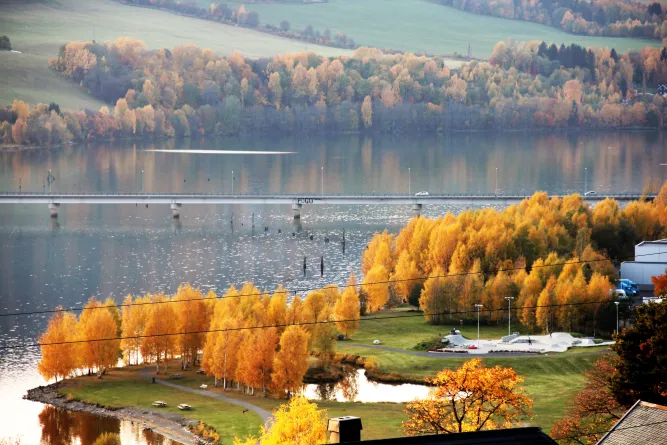
Both pike and burbot are also attractive to fishermen, and offer exciting experiences and not least big fish. Ice fishing for burbot in the evening south of the Vingnes Bridge in February and March often yields good catches. This predatory fish is lured with pieces of fish along the bottom. The setting for this evening fishing is special, with the magnificent lights from the Olympic city and barn lanterns at the ice holes.
The pike is particularly voracious after spawning during the spring flood and can challenge the fishermen with powerful strikes and furious outbursts in a spring-sized river.
Fishing for the carp and bream in the Lågen delta in the spring and early summer often yields very good catches of fish between 1 and 3 kg. This fishery is ideal as a family fishing and for the advanced specialist in bait fishing. There are also some large perch during bait fishing at this time of year.
See also www.laagen-fiskeelv.no and www.lojff.org
In Øyerfjellet there are more than 40 fishing lakes, as well as over 100 km of rivers and streams. The really large lakes you will not find in Øyerfjellet, but many medium-sized mountain lakes and even more smaller ponds, most of them easily accessible. Some of the smaller ponds can offer really nice surprises. We do not say where.....
Fish species:
In most ponds, lakes and streams/rivers you will find trout. Minnows are found in many of the lakes. The following locations also offer other fish species:
Goppollvatnet:
Whitefish were released here in 1943. The whitefish has good breeding opportunities on Goppollvatnet, and the population has gradually become redundant. The Mountain Board has a project underway to thin out the whitefish population.
Øysteinsvatnet:
This is the only lake in Øyerfjellet where - in addition to trout - there are char.
Hornsjøen:
In addition to trout, there is a large population of perch on Hornsjøen. For a number of years, the mountain board has tried to thin out the population of perch here.
Åstaelv:
In Åsta there are grayling. How far up it goes is uncertain, but grayling have been caught far up in the NerÅst river.
Children/young people fish for free with a rod up to and including the year they turn 18, and do not need to buy a fishing license. Everyone else must buy a fishing license before the fishing starts. Rod fishing is allowed in the period 15 May - 31 August. Rod fishing is allowed everywhere in Øyer state commons. Each person can fish with a rod. See fishing rules.
Fishing with nets or otters is reserved for those who live inland according to the provisions of the Mountain Act. That is, people who have been living in Øyer for the past year, and who still live here. For fishing with nets and otters, detailed rules apply for each lake. See fishing rules.
Adapted fishing spot:
At the northern end of Våsjøen, arrangements have been made for people with reduced mobility to fish. There is a floating pier, and a rowing boat for loan. There is also a toilet, barbecue area and shelter.
See also Øyer mountain board
Fishing in Ringsaker
The fishing in Ringsaker Hunting and Fishing Area (RJFO) consists of the properties Philske Sameie and Brøttum, Ringsaker, Veldre, Nes and Furnes almenninger. The entire area comprises approx. 600 km2 of forest and uncultivated land. RJFO runs an active fish cultivation and a total of 20 artificial fishing lakes have been built. In addition to the artificial waters, RJFO has the same number of natural lakes/ponds, a total of over 40 lakes. Here are nice places for both the angler and the family fisherman. Many of the artificial lakes are built right next to the road, so it is easy for the whole family to get around.
See also www.rjfo.no
Laagen Fishing River - Fish Species
Lågen Fiskeelv represents a large watercourse system with 20 species of fish. The variation in the watercourse represents a h2ersity of habitats that are important for different species in different phases of life and parts of the year. Here is an overview of the distribution of all fish species.
Big trout
In the management plan area, there are large trout populations that have a food migration to Mjøsa, Losna and the river reservoirs above Hunderfossen. Large trout is an organic form of trout with a habitat shift from river to lake. There is a nutritional shift from benthic animals and terrestrial organisms to fish. This leads to a significant growth reversal and high maximum weight.
The dog tube
The dog tube lives in Lågen on the stretch up to Harpefossen for an average of 4 years before it smoltifies and migrates out into Mjøsa with a length of about 25 cm. In Mjøsa, the dog tube stays for 2-4 years before spawning maturity occurs and the first spawning migration begins. The dog cane can migrate all the way to Harpefossen. Abundant access to nutrients in Mjøsa gives an average length increase per year before spawning maturation of 10-15 cm. The dog cane can reach a weight of 18-20 kg.
Goose trout
Gausa trout migrate out of the river to Mjøsa mainly as two-year-olds (70%), and spend 4-6 summers there before it again seeks out the river on its first spawning migration. The average weight of spawning fish of Gausa trout is 1.6 kg and the average length is 53 cm. The Gausa watercourse carries sturgeon for about 20 km from the outlet in Lågen and up to the waterfalls Liesfossen in Gausa and Holsfossen in Jøra. Together with the smaller tributaries, the large trout-carrying stretch will be about 30 km. It spawns both in the main river and in the tributaries.
Loose trout
In appearance, the Losna trout differs from the Dog's Tube in that the Losnaaure is mainly slimmer and has a more cylindrical body cross-section than the Dograur. Losnaaure usually has several dots per area of body surface above the lateral line. These dots are also smaller and of a different shape than Hunderaure, and are dominated by small crescent-shaped woodpeckers. Dog's ears usually have round black woodpeckers with a lighter ring around them. In Losna there are several large trout populations that spawn in Lågen and the tributaries. Telemetry studies have shown that most spawn in Lågen. Genetic studies show that Vålaaure is a separate great trout strain. Based on analysed shell material at Vålaaure, there is a clear growth h2ide in the 3rd year of life. This is probably due to an emigration of smolts in the 2nd year of life.
See also www.laagen-fiskeelv.no
In Mjøsa, there are 20 species of fish in addition to freshwater crayfish. Mjøsa is rich in fish, especially vendace, whitefish, trout, perch and pike. Fishing for vendace (lågåsild) has long traditions, but interest in this fishery is now in decline. However, fishing for Mjøsa's large trout is growing.
The trout spawn in several of the tributaries (the most famous is the Dog Trout) and grow large in Lake Mjøsa, where it can weigh up to 15 kg. The trout population in Mjøsa was reduced due to regulations in the rivers and due to pollution, but various management measures mean that fishing is good today. Mjøsa is the only known locality for sculpin in Norway.
The large trout population in Mjøsa is one of Europe's largest. It consists of a number of different tribes that have their spawning rivers and streams. There are more than 40 rivers and streams around Mjøsa, each of which has its own distinctive strains of Mjøsa trout. The common feature is that they all use the lake as a breeding area. The size of the trunk is biologically adapted to the river/stream it comes from.
The reason for the size and peculiarity of the Mjøsa trout is due to several natural conditions;
Mjøsa's topographical conditions with large and deep water masses
The lake's large number of good spawning rivers and streams
The lake's rich population of grazing fish, especially hookfish and vendace
From the book "Water quality in Mjøsa, then and now by Ole Nasahoug
Fishing in Lillehammer
Almost all 20 species of fish found in Mjøsa are also present in the Lågen delta near Lillehammer. This provides varied fishing opportunities throughout the ice-free season.
The most sought-after fish in the lower parts of Lågen is the grayling, which offers a rich fishery from April to October. The grayling season starts with dry fly fishing between the ice floes in April and angling in May during the spring flood.
Throughout the summer and autumn, fly fishing is the most widespread. The large dog trout provides the most unchallenging and exclusive fishing experiences, and it is hard to fool. This is the largest population of Mjøsa trout, and inh2iduals between 8 and 12 kg are caught annually on a rod.
Both pike and burbot are also attractive to fishermen, and offer exciting experiences and not least big fish. Ice fishing for burbot in the evening south of the Vingnes Bridge in February and March often yields good catches. This predatory fish is lured with pieces of fish along the bottom. The setting for this evening fishing is special, with the magnificent lights from the Olympic city and barn lanterns at the ice holes.
The pike is particularly voracious after spawning during the spring flood and can challenge the fishermen with powerful strikes and furious outbursts in a spring-sized river.
Fishing for the carp and bream in the Lågen delta in the spring and early summer often yields very good catches of fish between 1 and 3 kg. This fishery is ideal as a family fishing and for the advanced specialist in bait fishing. There are also some large perch during bait fishing at this time of year.
See also www.laagen-fiskeelv.no and www.lojff.org
Fishing in Øyer
In Øyerfjellet there are more than 40 fishing lakes, as well as over 100 km of rivers and streams. The really large lakes you will not find in Øyerfjellet, but many medium-sized mountain lakes and even more smaller ponds, most of them easily accessible. Some of the smaller ponds can offer really nice surprises. We do not say where.....
Fish species:
In most ponds, lakes and streams/rivers you will find trout. Minnows are found in many of the lakes. The following locations also offer other fish species:
Goppollvatnet:
Whitefish were released here in 1943. The whitefish has good breeding opportunities on Goppollvatnet, and the population has gradually become redundant. The Mountain Board has a project underway to thin out the whitefish population.
Øysteinsvatnet:
This is the only lake in Øyerfjellet where - in addition to trout - there are char.
Hornsjøen:
In addition to trout, there is a large population of perch on Hornsjøen. For a number of years, the mountain board has tried to thin out the population of perch here.
Åstaelv:
In Åsta there are grayling. How far up it goes is uncertain, but grayling have been caught far up in the NerÅst river.
Fishing rules
Children/young people fish for free with a rod up to and including the year they turn 18, and do not need to buy a fishing license. Everyone else must buy a fishing license before the fishing starts. Rod fishing is allowed in the period 15 May - 31 August. Rod fishing is allowed everywhere in Øyer state commons. Each person can fish with a rod. See fishing rules.
Fishing with nets or otters is reserved for those who live inland according to the provisions of the Mountain Act. That is, people who have been living in Øyer for the past year, and who still live here. For fishing with nets and otters, detailed rules apply for each lake. See fishing rules.
Adapted fishing spot:
At the northern end of Våsjøen, arrangements have been made for people with reduced mobility to fish. There is a floating pier, and a rowing boat for loan. There is also a toilet, barbecue area and shelter.
See also Øyer mountain board
Fishing in Ringsaker
The fishing in Ringsaker Hunting and Fishing Area (RJFO) consists of the properties Philske Sameie and Brøttum, Ringsaker, Veldre, Nes and Furnes almenninger. The entire area comprises approx. 600 km2 of forest and uncultivated land. RJFO runs an active fish cultivation and a total of 20 artificial fishing lakes have been built. In addition to the artificial waters, RJFO has the same number of natural lakes/ponds, a total of over 40 lakes. Here are nice places for both the angler and the family fisherman. Many of the artificial lakes are built right next to the road, so it is easy for the whole family to get around.
See also www.rjfo.no
Laagen Fishing River - Fish Species
Lågen Fiskeelv represents a large watercourse system with 20 species of fish. The variation in the watercourse represents a h2ersity of habitats that are important for different species in different phases of life and parts of the year. Here is an overview of the distribution of all fish species.
Big trout
In the management plan area, there are large trout populations that have a food migration to Mjøsa, Losna and the river reservoirs above Hunderfossen. Large trout is an organic form of trout with a habitat shift from river to lake. There is a nutritional shift from benthic animals and terrestrial organisms to fish. This leads to a significant growth reversal and high maximum weight.
The dog tube
The dog tube lives in Lågen on the stretch up to Harpefossen for an average of 4 years before it smoltifies and migrates out into Mjøsa with a length of about 25 cm. In Mjøsa, the dog tube stays for 2-4 years before spawning maturity occurs and the first spawning migration begins. The dog cane can migrate all the way to Harpefossen. Abundant access to nutrients in Mjøsa gives an average length increase per year before spawning maturation of 10-15 cm. The dog cane can reach a weight of 18-20 kg.
Goose trout
Gausa trout migrate out of the river to Mjøsa mainly as two-year-olds (70%), and spend 4-6 summers there before it again seeks out the river on its first spawning migration. The average weight of spawning fish of Gausa trout is 1.6 kg and the average length is 53 cm. The Gausa watercourse carries sturgeon for about 20 km from the outlet in Lågen and up to the waterfalls Liesfossen in Gausa and Holsfossen in Jøra. Together with the smaller tributaries, the large trout-carrying stretch will be about 30 km. It spawns both in the main river and in the tributaries.
Loose trout
In appearance, the Losna trout differs from the Dog's Tube in that the Losnaaure is mainly slimmer and has a more cylindrical body cross-section than the Dograur. Losnaaure usually has several dots per area of body surface above the lateral line. These dots are also smaller and of a different shape than Hunderaure, and are dominated by small crescent-shaped woodpeckers. Dog's ears usually have round black woodpeckers with a lighter ring around them. In Losna there are several large trout populations that spawn in Lågen and the tributaries. Telemetry studies have shown that most spawn in Lågen. Genetic studies show that Vålaaure is a separate great trout strain. Based on analysed shell material at Vålaaure, there is a clear growth h2ide in the 3rd year of life. This is probably due to an emigration of smolts in the 2nd year of life.
See also www.laagen-fiskeelv.no
Read more
Contact information
- +47 61289800
- Jernbanegata 2 - 2609 - Lillehammer