



Øyer and Tretten Church
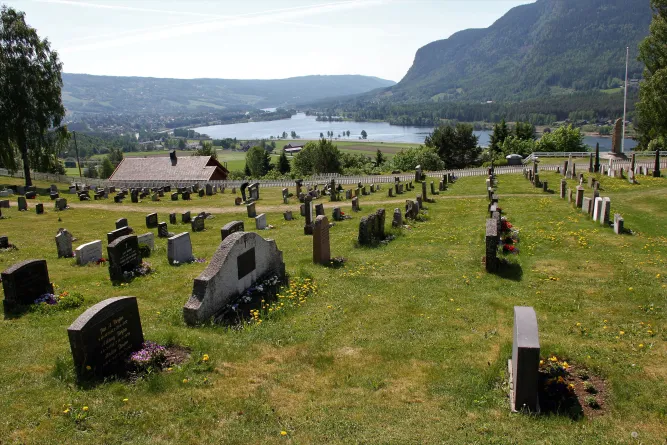
Øyer municipality is divided into two parishes - Øyer and Tretten - one church in each parish. Øyer church was consecrated on 2 July 1725 and Tretten church was consecrated on 12 September 1728.
Øyer municipality is h2ided into two parishes - Øyer and Tretten - one church in each parish. Øyer church was consecrated on 2 July 1725 and Tretten church was consecrated on 12 September 1728.
According to historians, it is known that in the Middle Ages there were two churches in Øyer parish, at Skåe and at Orrestad. There is much to suggest that the church at Skåe was the oldest. There was the village center at that time, there was the court and there the Tjodvegen (pilgrim road to Nidaros) passed by. The church at Skåe is mentioned twice in the Middle Ages, in 1333 and in 1335.
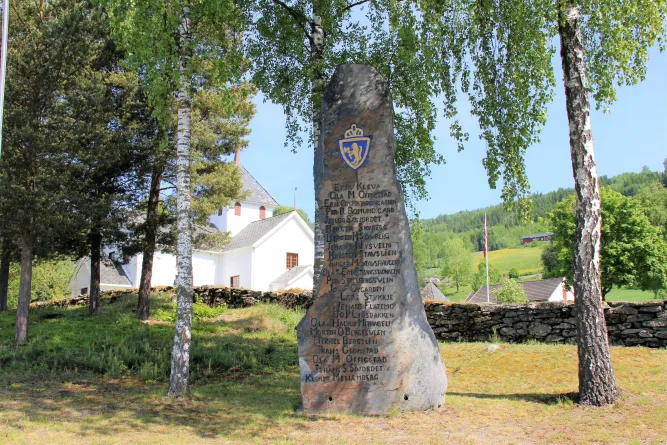
There is reason to believe that the church at Skåe fell into disrepair after the Black Death in 1349-50, just like many other churches at this time. In the 1950s, a menhir stone was erected at Sygard Skåe where it is believed that this church may have stood. The church at Orrestad, which is the old name of Øyer vicarage, is mentioned for the first time in 1323.
Carved cruciform churches from the early 1700s
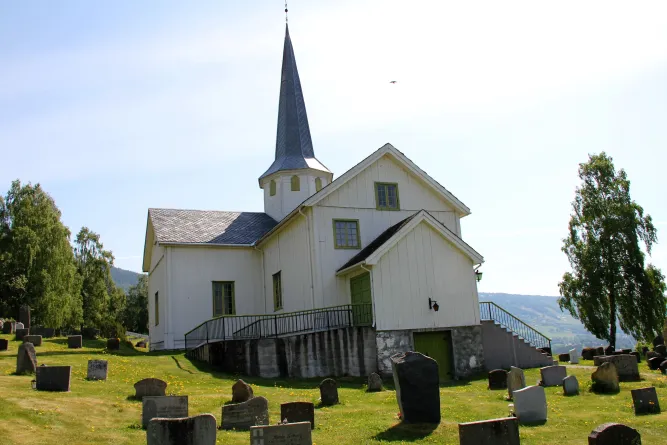
Was consecrated by the parish priest in Øyer, Christian Wolfgang Monrath, on 2 July 1725. The old church at Orrestad, a three-aisled stave church, had burned down after a lightning strike three years earlier.
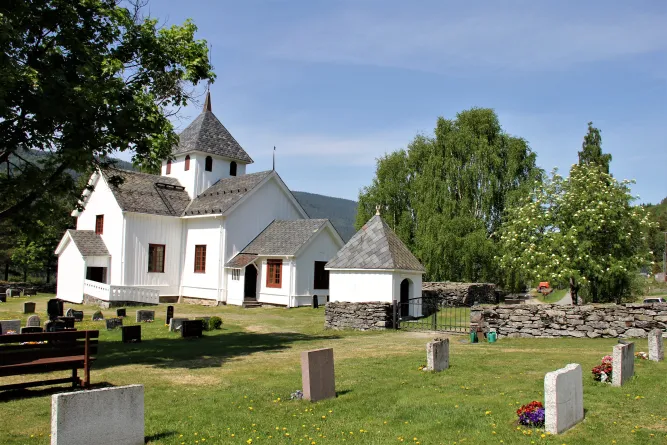
When the church was consecrated in 1725, it had neither a cladding nor a tower. The tower and spire were erected sometime between 1748 and 1775. The church probably had a slate roof, and was tarred. Since then, it has been painted reddish-brown several times. It is possible that the current white colour first appeared in connection with a major restoration work in 1875.
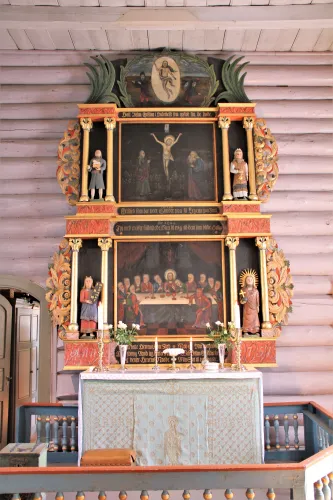
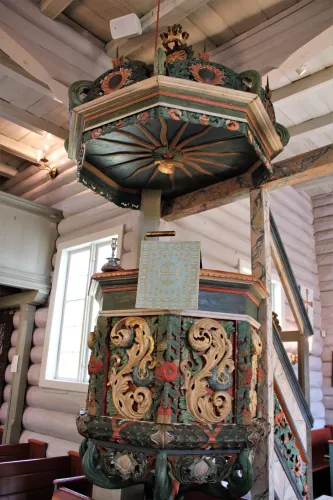
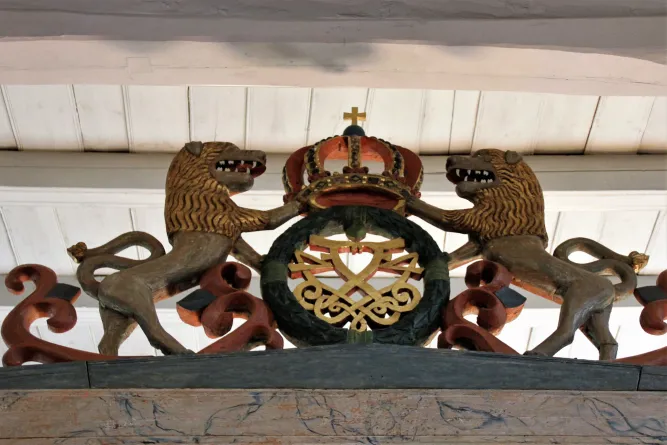
Experts believe that the same person carved both the altarpiece, the pulpit, the lion ornament on the choir beam, and perhaps also the baptismal font ceiling. According to folk tradition, Bjørn Bjørnson Olstad (1705-1763) is the master of this. He was from Nordigard Olstad is said to have been the first gudbrandsdøl to carve in the acanthus style. The paintings are, in all likelihood, made by the son of a clergyman, Eggert Munch from Vågå.
Øyer church has two memorial plaques, so-called epitaphs. To the left of the altar hangs the Monrath family's epitaph. Christian W. Monrath was parish priest in Øyer from 1698 to 1738.
Parish priest Chr. W. Monrath and his wife Susanne, née Kraft, stand in the middle. He with a Bible or altar book, she with a note that says: "Christ is my life, and to die is a grace to me". The children are arranged on each side, the boys on the left and the girls on the right. Those of the couple's children who have died (1 boy and three girls) have white dresses, and a flower bow in front of them on the floor. The size of the dead children indicates how old they were when they died. At the back, a resurrection motif is painted.
Øyer Church underwent an extensive restoration in the 1880s, when a large part of the old interior was removed. The choir partition and the ceiling above the pulpit were taken down, and the doors around the baptismal font were unhooked. Under the ceiling beams, a flat ceiling was laid. The rest of the inventory was painted in brown and gold.
In 1963, a major restoration work was started again, this time to bring the church back to its original condition as much as possible. Parts of the old inventory were found partly in the attic and partly in the remaining church stable on the west side of the church field. On the basis of, among other things. other than these, the restoration could be initiated, which was carried out in cooperation with the Directorate for Cultural Heritage.
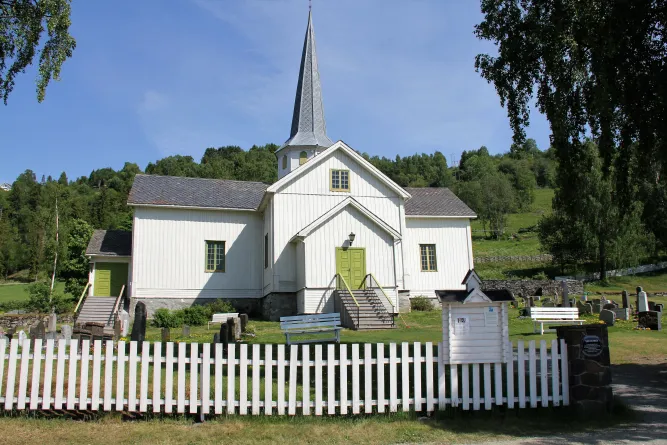
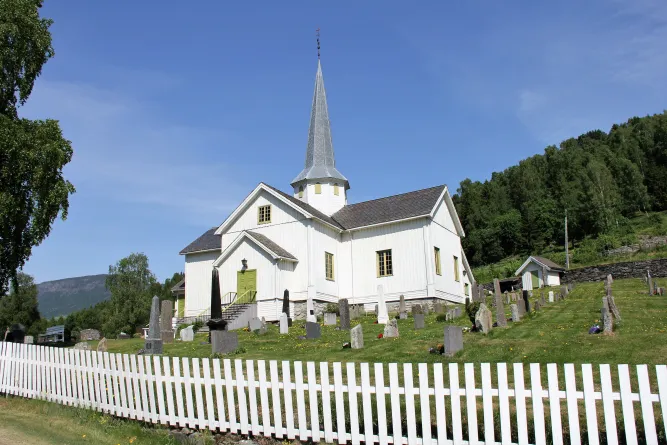
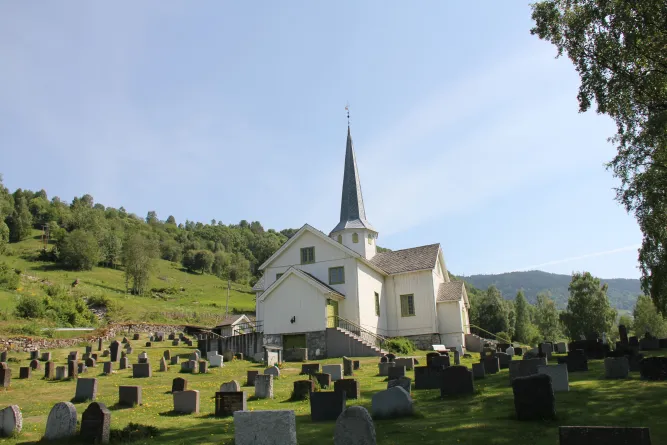
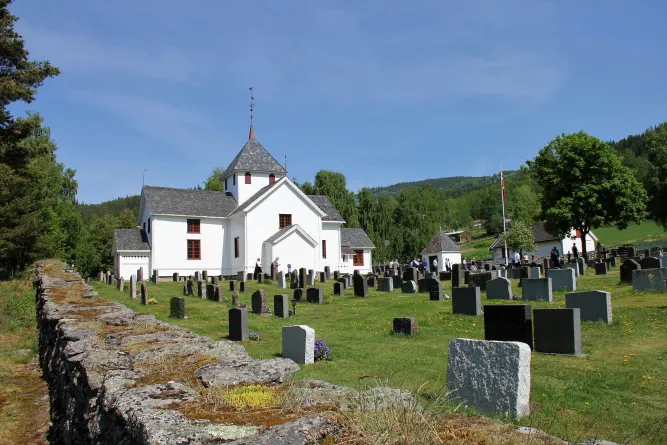
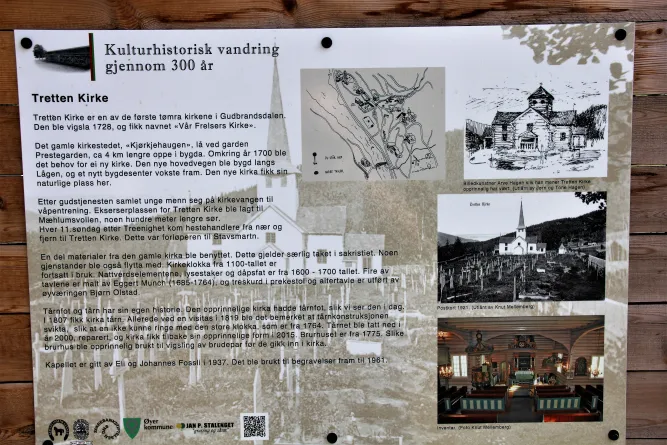
Carved cruciform churches from the early 1700s. Was consecrated on 12 September 1728 and was named "Our Saviour's Church". It replaced a timbered long church from the 1580s that had become too small. This church was located further up the valley side, by the farm Prestgården.
When the church was opened in 1728, it was neither boarded nor painted. The cladding was introduced in 1747. In 1774, the church became tarbred. It was first painted in 1807 - probably in red. The white color first appeared in 1875. The church originally did not have a tower either, only a tower base for the bells. The tower itself was erected around 1807 in connection with other work on the church.
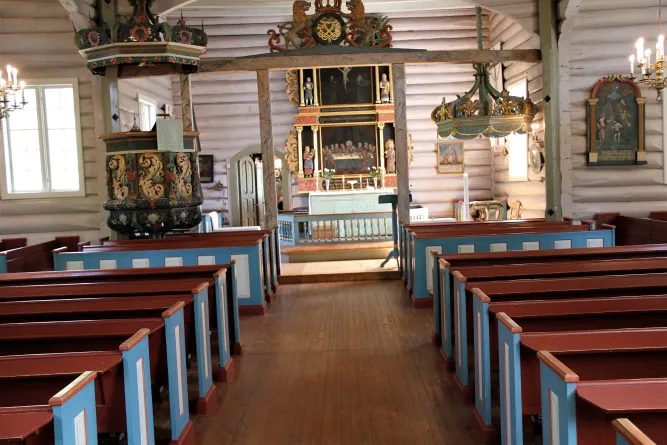
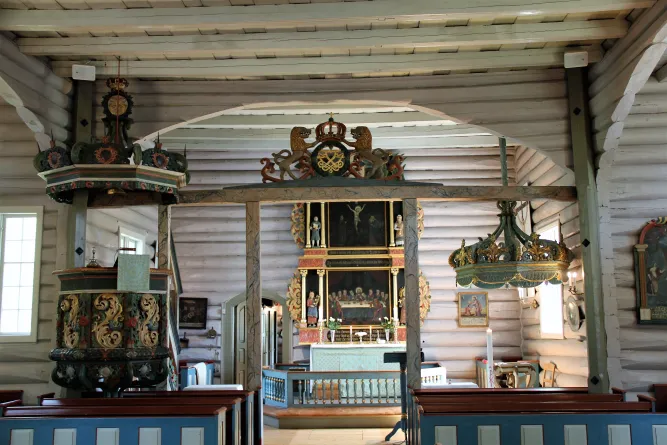
The tower has presented constant problems ever since it was erected in 1807. In 2000, so much damage was found in the supporting structure of the tower that it was taken down and placed on the ground next to the church. The altarpiece and pulpit were carved by the islander Bjørn Bjørnson Olstad, about 1750, and are quite similar in Øyer church.
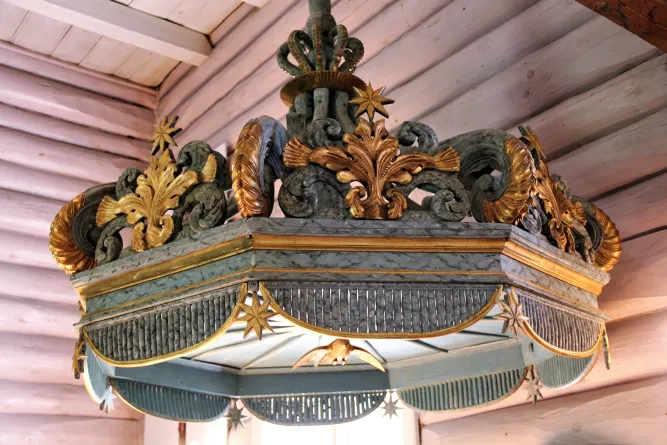
The baptismal font is special, without any parallel. It was carved by Ole Olsen Klævamoen in the late 1780s. Above it is square. From the sides, four arcanthus vines descend as bones. Under the surface, an angel stands and holds up with his arms above his head. Above the baptismal font hangs an unusually large ceiling, which repeats the motifs of the pulpit ceiling.
Whiteboards. In the 1600s, it became common to give "tablets" - i.e. paintings - to the churches. They bear the name of the giver, not the painter. In Thirteen Church, five of these have been preserved. When the church was painted in 1883, the paintings were taken down to be stored in the gallery during the period. Here they stood for a long time, and during this time it is believed that some of them were lost or destroyed. For example, a painting given by Erik O. Rindal, dated 1688, which depicted his own ascension. A smaller painting - Christ crowning a child - also disappeared at this time. 60 years later, it was found again at an antique dealer in Oslo. This was bought back and hung up in the church again. This tablet, dated 1713, shows Jesus crowning a child.
The other tablets are from 1714, 1724, 1730 and 1788.
The ceiling of the sacristy is interesting. In the 1960s, the white-painted ceiling boards in the sacristy began to peel, and it was discovered during a test uncover that the ceiling was decorated. In 1971, it was decided to uncover the roof completely. The old ceiling boards were taken down and several layers of white paint were removed. An extraordinarily rich and beautiful decoration of high artistic quality was revealed, with rosettes and tendrils held in the colours red, white and black. That the decoration was done in the current church is completely unlikely. The tables on which it was painted bore the unmistakable mark of having been used elsewhere. There were unpainted fields where previous roof beams had been located. From the decoration one can see that in its original form it has covered more than the approx. 20 square meters used for the sacristy. One must be allowed to assume that the ceiling boards and beams originally had their place in the old carved long church from the 1580s.
According to historians, it is known that in the Middle Ages there were two churches in Øyer parish, at Skåe and at Orrestad. There is much to suggest that the church at Skåe was the oldest. There was the village center at that time, there was the court and there the Tjodvegen (pilgrim road to Nidaros) passed by. The church at Skåe is mentioned twice in the Middle Ages, in 1333 and in 1335.
There is reason to believe that the church at Skåe fell into disrepair after the Black Death in 1349-50, just like many other churches at this time. In the 1950s, a menhir stone was erected at Sygard Skåe where it is believed that this church may have stood. The church at Orrestad, which is the old name of Øyer vicarage, is mentioned for the first time in 1323.
Carved cruciform churches from the early 1700s
Was consecrated by the parish priest in Øyer, Christian Wolfgang Monrath, on 2 July 1725. The old church at Orrestad, a three-aisled stave church, had burned down after a lightning strike three years earlier.
Øyer Church
When the church was consecrated in 1725, it had neither a cladding nor a tower. The tower and spire were erected sometime between 1748 and 1775. The church probably had a slate roof, and was tarred. Since then, it has been painted reddish-brown several times. It is possible that the current white colour first appeared in connection with a major restoration work in 1875.
Experts believe that the same person carved both the altarpiece, the pulpit, the lion ornament on the choir beam, and perhaps also the baptismal font ceiling. According to folk tradition, Bjørn Bjørnson Olstad (1705-1763) is the master of this. He was from Nordigard Olstad is said to have been the first gudbrandsdøl to carve in the acanthus style. The paintings are, in all likelihood, made by the son of a clergyman, Eggert Munch from Vågå.
Øyer church has two memorial plaques, so-called epitaphs. To the left of the altar hangs the Monrath family's epitaph. Christian W. Monrath was parish priest in Øyer from 1698 to 1738.
Parish priest Chr. W. Monrath and his wife Susanne, née Kraft, stand in the middle. He with a Bible or altar book, she with a note that says: "Christ is my life, and to die is a grace to me". The children are arranged on each side, the boys on the left and the girls on the right. Those of the couple's children who have died (1 boy and three girls) have white dresses, and a flower bow in front of them on the floor. The size of the dead children indicates how old they were when they died. At the back, a resurrection motif is painted.
Øyer Church underwent an extensive restoration in the 1880s, when a large part of the old interior was removed. The choir partition and the ceiling above the pulpit were taken down, and the doors around the baptismal font were unhooked. Under the ceiling beams, a flat ceiling was laid. The rest of the inventory was painted in brown and gold.
In 1963, a major restoration work was started again, this time to bring the church back to its original condition as much as possible. Parts of the old inventory were found partly in the attic and partly in the remaining church stable on the west side of the church field. On the basis of, among other things. other than these, the restoration could be initiated, which was carried out in cooperation with the Directorate for Cultural Heritage.
THIRTEEN CHURCH
Carved cruciform churches from the early 1700s. Was consecrated on 12 September 1728 and was named "Our Saviour's Church". It replaced a timbered long church from the 1580s that had become too small. This church was located further up the valley side, by the farm Prestgården.
When the church was opened in 1728, it was neither boarded nor painted. The cladding was introduced in 1747. In 1774, the church became tarbred. It was first painted in 1807 - probably in red. The white color first appeared in 1875. The church originally did not have a tower either, only a tower base for the bells. The tower itself was erected around 1807 in connection with other work on the church.
The tower has presented constant problems ever since it was erected in 1807. In 2000, so much damage was found in the supporting structure of the tower that it was taken down and placed on the ground next to the church. The altarpiece and pulpit were carved by the islander Bjørn Bjørnson Olstad, about 1750, and are quite similar in Øyer church.
The baptismal font is special, without any parallel. It was carved by Ole Olsen Klævamoen in the late 1780s. Above it is square. From the sides, four arcanthus vines descend as bones. Under the surface, an angel stands and holds up with his arms above his head. Above the baptismal font hangs an unusually large ceiling, which repeats the motifs of the pulpit ceiling.
Whiteboards. In the 1600s, it became common to give "tablets" - i.e. paintings - to the churches. They bear the name of the giver, not the painter. In Thirteen Church, five of these have been preserved. When the church was painted in 1883, the paintings were taken down to be stored in the gallery during the period. Here they stood for a long time, and during this time it is believed that some of them were lost or destroyed. For example, a painting given by Erik O. Rindal, dated 1688, which depicted his own ascension. A smaller painting - Christ crowning a child - also disappeared at this time. 60 years later, it was found again at an antique dealer in Oslo. This was bought back and hung up in the church again. This tablet, dated 1713, shows Jesus crowning a child.
The other tablets are from 1714, 1724, 1730 and 1788.
The ceiling of the sacristy is interesting. In the 1960s, the white-painted ceiling boards in the sacristy began to peel, and it was discovered during a test uncover that the ceiling was decorated. In 1971, it was decided to uncover the roof completely. The old ceiling boards were taken down and several layers of white paint were removed. An extraordinarily rich and beautiful decoration of high artistic quality was revealed, with rosettes and tendrils held in the colours red, white and black. That the decoration was done in the current church is completely unlikely. The tables on which it was painted bore the unmistakable mark of having been used elsewhere. There were unpainted fields where previous roof beams had been located. From the decoration one can see that in its original form it has covered more than the approx. 20 square meters used for the sacristy. One must be allowed to assume that the ceiling boards and beams originally had their place in the old carved long church from the 1580s.
Read more
Contact information
- +47 61 26 82 20
- [email protected]
- Tingberg - 2636 - Øyer